

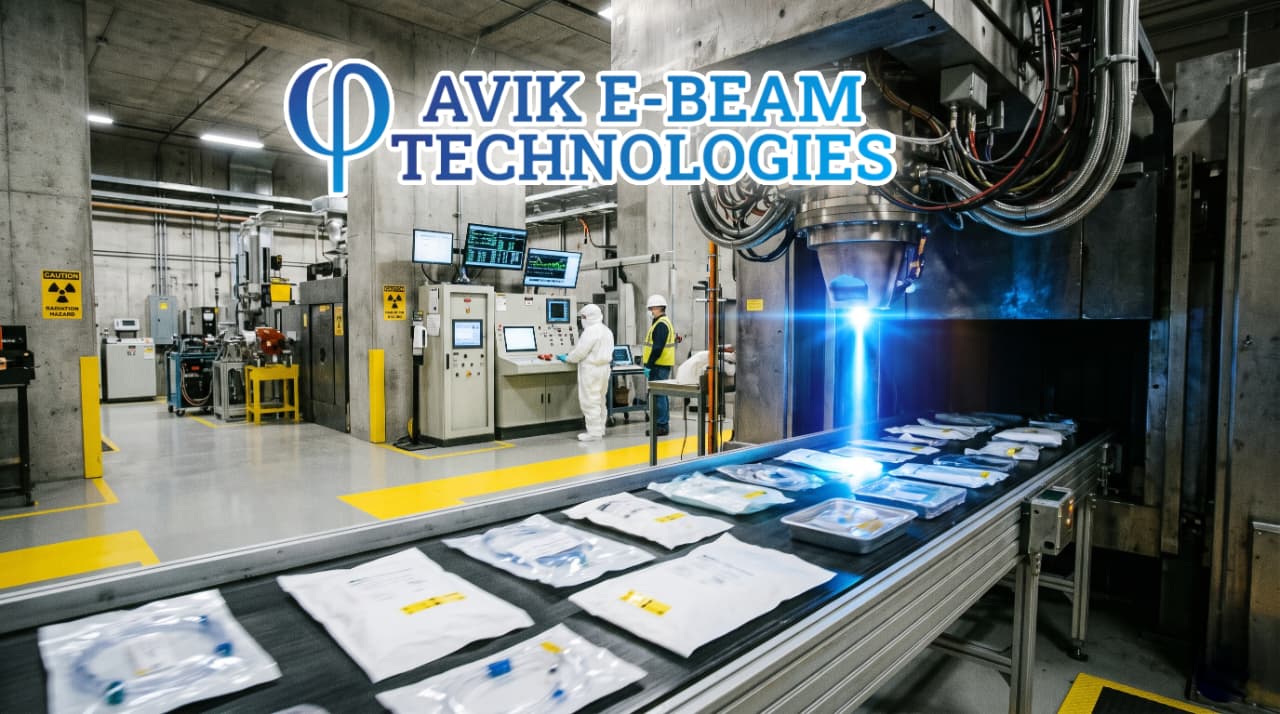
When medical device engineers and pharmaceutical manufacturers review their first quote for ebeam sterilization, they frequently ask one key question: why does the entry-level ebeam sterilization cost look higher than chemical fumigation? At first glance, the initial setup fee can seem steep. However, once you examine the advanced machine physics, high-voltage infrastructure, and huge inventory savings, the investment proves to be remarkably cost-effective.
What Factors Drive the True E-Beam Sterilization Cost?
Conventional methods often rely on chemical tanks or decaying radioactive materials. In contrast, high-energy electron beam processing uses an electricity-driven Linear Accelerator (Linac). Because of this advanced mechanism, several distinct engineering and regulatory factors influence the overall pricing structure:
1. Multi-Million Dollar Capital and High Electrical Power Demands
First and foremost, an industrial 3 MeV / 100 kW Linear Accelerator is a major engineering achievement. The machine accelerates electrons close to the speed of light to achieve complete microbial inactivation in seconds. In addition, energizing this accelerator requires high-tension (HT) industrial power grids, heavy radiofrequency systems, and thick radiation shielding vaults. Because these substantial baselines operate continuously, the fixed machine running cost remains identical whether you process an agile 3 kg trial or a large commercial shipment.
2. Beam Physics and Package Presentation
Furthermore, pricing depends heavily on package geometry rather than gross weight alone. Electrons have a defined penetration depth in physical materials. For that reason, products must pass through the electron curtain laid out in flat, single-layer arrangements (often 5 mm to 15 mm in effective density) rather than bulk-stacked pallets.
Consequently, increasing a sample batch from 3 kg to 9 kg does not mean a minor increment in work. Instead, it multiplies conveyor tray footprint by three to four times. This extra volume requires customized line balancing, multiple mechanical passes, and additional beam calibration slots.
3. Stringent Dosimetry Calibration and Regulatory Audits
Finally, compliance is never left to chance. Every validated production run demands accurate dosimetric mapping to record minimum and maximum absorbed doses (Dmin and Dmax). Dedicated Radiation Safety Officers (RSOs) monitor each stage, and technicians analyze thin-film radiochromic dosimeters via spectrophotometry. Moreover, maintaining licenses under statutory authorities like the Atomic Energy Regulatory Board (AERB) and meeting ISO 11137 quality benchmarks requires non-stop maintenance and precision audits.
Lifecycle Comparison: E-Beam vs. Ethylene Oxide (EtO) vs. Gamma
Although chemical gas alternatives might look cheaper on initial paperwork, their lengthy processing cycles add massive hidden costs:
| Sterilization Modality | Exposure Speed | Quarantine & Degassing | Chemical Residues | Net Financial Impact |
|---|---|---|---|---|
| Electron Beam (E-Beam) | Fractions of a second | Zero quarantine (Instant release) | 100% residue-free and non-toxic | Lowest total lifecycle cost: Rapid turnaround frees up working capital immediately. |
| Ethylene Oxide (EtO) | 12 to 24+ hours | 7 to 21 days forced aeration | High toxic and carcinogenic residuals | Heavy inventory holding costs, long turnaround delays, and tight emission penalties. |
| Gamma (Cobalt-60) | Multiple continuous hours | Short hold, but slow runs | Zero residues, continuous decay | Unpredictable isotope refill fees and global supply shortages. |
Therefore, when you remove the two to three weeks of warehouse delays required for toxic gas aeration, e-beam processing becomes the more profitable path for modern medical and biotech operations.
Global E-Beam Pricing: How India Compares to Western Facilities
High setup charges are standard across the international contract irradiation market. In North America and Western Europe, specialized validation and machine setup fees routinely reach thousands of dollars:
| Cost Component | US / North America Facilities | Western Europe Facilities | Avik Ebeam Technologies |
|---|---|---|---|
| Minimum Machine Lot Fee | $2,500 – $4,500 USD (₹2.10L – ₹3.75L) | €2,200 – €3,800 EUR (₹2.00L – ₹3.45L) | Industry-Leading Local Rates (A small fraction of global costs) |
| Dose Mapping Documentation | $300 – $600 USD per batch | €300 – €500 EUR per batch | Fully Included (Traceable Dmin/Dmax reports) |
| Senior Scientific Consulting | $150 – $300 USD / hour | €180 – €350 EUR / hour | Fully Included (Guided by ex-BARC senior scientists) |
| Turnaround Time (TAT) | 10 to 15 business days | 10 to 14 business days | 5 to 7 working days |
Why Avik Ebeam Offers the Best Price Worldwide with Guaranteed Results
At Avik Ebeam Technologies, our goal is to bring advanced ionizing technology within easy reach for medtech innovators, exporters, and pharmaceutical manufacturers:
- Fully Licensed 3 MeV Facility: We operate a high-energy Linear Accelerator plant in Jaipur, Rajasthan, licensed by the AERB and fully aligned with ISO 11137 quality benchmarks.
- Guaranteed Sterility Assurance Level (10-6 SAL): Every validation run is carefully calibrated to hit your exact target absorbed dose while safeguarding polymer strength, burst pressure, and active drug potency.
- All-Inclusive Transparent Pricing: We believe in clear, predictable commercial quotes. Your fee covers machine setup, continuous automated conveyor runs, radiochromic film dosimetry verification, and indicator labels without surprise add-on charges.
- Guidance from Senior Physicists: Product validation is guided directly by experienced radiation scientists, including former senior specialists from the Bhabha Atomic Research Centre (BARC).
- Rapid Dispatch in 5 to 7 Days: Thanks to established logistics channels across Bengaluru, Gujarat, Hyderabad, Tamil Nadu, and North India, your products move smoothly from pilot trials to full-scale commercial release.